Apple Card – A Curious Case of Flywheels, Ecosystems, Moats & First Principle Thinking


Credit cards are like sins, enjoy now & pay later!

– Anonymous
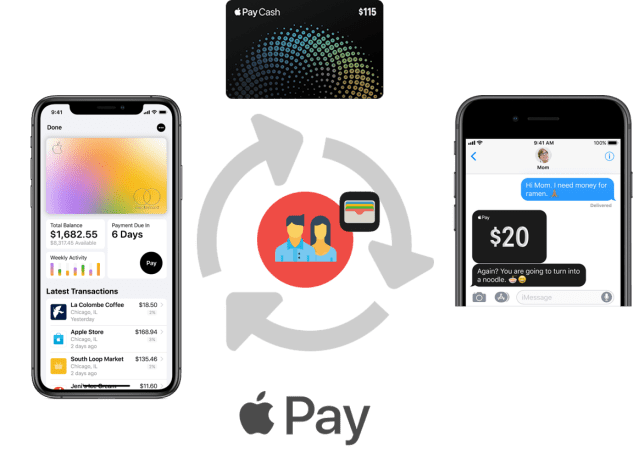
 

Apple Card Fly Wheel


Flatbush National Bank of Brooklyn was the first bank to issue a credit card in 1946. By the end of 2017, just within US, there were 364 million open credit card accounts with Chase, Capital One and Bank of America as the 3 biggest credit card issuers. An average American today has 2.9 to 3.7 cards. Saying that this space is “hyper-crowded” would be an understatement.

In this mature hyper-crowded landscape, Apple launched their Apple Card earlier this week. In this blog post, I’ll try to analyze the elements underlying the Apple Card product strategy while delegating the other aspects (financial features, benefits, comparison with other cards, etc.) to the trade rags.

Let’s start with the onboarding experience which I believe is a core part of the Apple Card product strategy.


Onboarding Funnel & Friction: Every product team tries (to a varying degree) to manage their onboarding & adoption experience, but very few v1.0 products deliver a perfectly polished onboarding experience. Apple Card v1.0 managed to deliver that, any traces of onboarding friction has been nuked with a vengeance.

Earlier this week I got an invite email to apply for the Apple Card. Clicking the invite (in iOS Mail) took me into the iPhone Wallet app to start the credit card application process. Since Apple already knew my name, phone, email, address, etc. everything in the form was prefilled. The only 2 pieces of information I had to enter was my annual income and last 4 digits of social – that’s it. The Wallet app did beep-boop for 3 seconds and confirmed that Goldman Sachs approved my application for $20k. This entire journey of “credit card application → Goldman Sachs approval → accept card -> card added to Wallet → make it default for all Apple payments → enable for Apple Pay →  ship a physical card? → card ready for use” took less than 90 seconds – yes, less than 90 seconds. Apple made it sure that if you had an iota of curiosity/intent to get the Apple Card and clicked a button or two, you will end up with the Card – it was that frictionless!

In contrast, Wells Fargo bank that has known me for 20+ years, wants to know my mother’s maiden name, housing status, monthly mortgage payment, employment status, occupation, current employment length and half a dozen other data points before it takes me to the next step… fuhgeddaboudit!


Card Experience: A lot has been written and ooh-aaah’ed about the Apple Card user experience, benefits, comparison with other cards, etc. (see this, this and this). I won’t repeat the details, but I’ll mention top 10 highlights for the sake of context and completeness. Like all things Apple, the Apple Card experience in the Wallet app is well polished where you can see: [1] how much you spent, where, in what categories [2] card color is a heat map that reflects your spending pattern [3] merchant details, location, etc. [4] weekly/month spending trends [5] cash back amount that you accrued [6] setup end of the month payments [7] your credit limit, available credit, APR [8] push notifications when your physical card is about to be delivered [9] 1-click activation of the physical card [10] reach Apple Card support via text messages (that’s really cool).

The end to end Apple Card experience is tailor made for the impatient gen Z iOS kids who grew up suckling on the iPhone teat. As they come of age ready for credit cards, at least in US, I’m betting that they will gravitate towards Apple Card’s mobile-first experience rather than a Chase or Wells Fargo card.


Ecosystems, Moats & Switching Costs: When you are a large company with many products, you try to gain “unfair advantages” by doing proprietary integrations into your own ecosystem. Microsoft products tend to be integrated into Windows & Office franchise. Google products are integrated into their own portfolio – gmail, maps, Android, calendar, hangouts, etc. Predictably so, Apple weaved the Apple Card experience with their Wallet, Apple Pay, etc. In addition, they did a couple of things very subtly that I thought were really interesting.

  • Apple Card comes with 2% cashback when you use it via Apple Pay. However, this cashback declines to 1% if you use the physical card. Apple really wants you to use Apple Pay and not that plastic card. In 5 years since its launch, Apple Pay is accepted at 65% of all retail locations and 74 of the top 100 merchants in US. With the combination of Apple Card + Apple Pay, they want to continue moving the needle from 65% towards 100%. Besides, using the Apple Pay via iPhone is supposedly more secure than using the plastic card – an aspect I’m not familiar with.
  • In all these years, Apple had my credit card details to charge my AppStore purchases. Now, to pay the Apple Card balance at the end of the month, I had to give them my bank checking account details – something they never had access to. I am willing to bet that Apple will use my bank account details in a meaningful manner down the road.
  • The 1%/2% daily cashback from your Apple Card spending goes into your Apple Cash debit card (issued by Discover) and NOT into your Apple Credit Card. In all these years, like most users, I never bothered using Apple Cash Card. With this move, Apple is herding its users to use Apple Cash Card in additional to the Apple Credit Card. Now that I have $8 in my Apple Cash debit card, Apple hopes that I’ll use it for Starbucks cappuccinos or for peer-to-peer cash payments (paying your co-worker for lunch) via iMessage rather than PayPal/Venmo. The execs at PayPal/Venmo just got served!


With all this, Apple is not only strengthening its ecosystem, but also adding another layer of moat around its active user base of 1.4 billion Apple devices (that include 900 million iPhones). The fruit company wants to make sure that the Pirates of Android can’t easily pillage its iPhone user base.


Financial Flywheel: Till about a month ago, Apple’s financial flywheel was “Wallet + 3P Apple Pay”. 3P Apple Pay here refers to the Apple Pay experience with credit cards issued by 3rd party banks such as Wells Fargo, Chase, BoFA, etc. These banks issue hundreds of millions of credit cards to consumers using their existing systems & processes – i.e. the business as usual incumbent model. With these old guard banks, Apple had limited control & innovation ability on the credit card experiences with iPhones/iPads. Now with a willing partner like Goldman Sachs, Apple can rethink & innovate the end-to-end credit card experience with iPhones/iPads – i.e. 1P Apple Card & 1P Apple Pay. Now, Apple’s financial flywheel is “Wallet + 3P Apple Pay + 1P Apple Card + 1P Apple Pay + Apple Cash Card + iMessages + your Checking Account”. Reeling in Apple Cash debit card into its payments flywheel is brilliant!


Overall, what was Apple’s approach & strategy with Apple Card?

It’s First Principle Thinking!

When launching a new product in an existing hyper-crowded segment, it’s very easy to fall into the trap of emulating others. Apple successfully avoided that trap with their First Principle Thinking:

  • What are customers’ pain points with credit cards?
  • How can I solve them better than others for my (iOS) customers?
  • What’s my differentiation from competition?
  • What’s my “unfair advantage”?
  • How do I ensure easy adoption & usage?
  • How do I weave it into my ecosystem and flywheel?
  • Who are my partner/dependencies? How do I choose them to serve my strategy?


The Apple Card experience is a reflection of that First Principle thinking. To execute on those vectors, with Goldman Sachs as the card issuer, Apple found a partner with the necessary financial gravitas who Apple could bend to their will and not be bogged down by incumbent thinking (i.e. this is how we have always done it). In fact, Apple’s official tag line “A new kind of credit card. Created by Apple, not a bank” reflects their First Principle approach to delivering a meaningful Apple Card experience!


 

Pareto Principle for Product Success


80-20


In late 1800’s an Italian economist named Vilfredo Pareto observed that 80% of Italy’s land was owned by about 20% of its population – the elite of the day. This concentration characterized by 80/20 distribution has now become the famous Pareto Principle (aka the 80/20 thumb rule). This 80/20 rule manifests itself in many areas of our day to day life. Some examples – for many non-fiction books, 80% of the main content is captured within the 20% of the pages, the rest is repetitive. For many companies, 80% of their sales income comes from 20% of their clients. In industrial environments, 20% of the hazards lead to 80% of the injuries.

Interestingly, this 80/20 rule can be used effectively to drive the strategy, execution & decision making when managing technology products & teams.


Product Market Fit: Most startups (& even established companies with emerging products) struggle for a while before they find their “market-fit” – i.e. they try pitching their product/service/technology in a variety of industries, verticals, use cases, price points, geographies etc. The lucky ones find the market-fit before the funding dries up and the no-so-lucky ones go belly up without ever discovering the market-fit.

It’s important to have a Go-To-Market strategy & target segmentation based on the attributes of your product/service. At the same time, during the discovery phase, it’s important to experiment & pitch your product for a variety of use cases – some of which should be outside your original target segment. If you are lucky, for every 10 attempts you make, you may find some semblance of market-fit in 1 or 2 cases (i.e. the 20% rule). VMware is well known for its virtualization technology. However, in the early days of VMware, they had to struggle for a long time to find the market-fit until their product landed in the hands of system administrators who were responsible for managing servers – the rest is history. To hear more about VMware’s early struggles, hear this interesting podcast interview with Diane Green (co-founder & former CEO of VMware)…


Product Usage: A typical technology product (software or hardware) contains many bells & whistles. My experience is (some anecdotal and some data-driven), most users (80%?) use a very small set (20%?) of the available features/capabilities on a daily basis. This provides a fantastic opportunity for product teams to derive amplified gains with minimal effort – identify the most used 20% feature-set and polish them to perfection leading to remarkable results! If your 20% feature set offers the best user experience possible, your users will love your product and think thrice before considering alternatives!


KPI’s: Product teams typically use metrics/OKRs/KPIs to measure & drive outcomes. These KPIs can take various forms like users, usage, transactions, customer satisfaction, NPS, repeat usage, DAU, MAU, geographical distribution, platform distribution, customer distribution, industry distribution etc. Depending on who you speak to within the company, the metrics list can be endless and it’s not practical to monitor and review all the metrics. A more practical approach to success would be to identify the top few metrics (the 20%) and drive those with a maniacal focus! Having fewer KPIs to monitor makes it easier for product teams to focus on those KPIs and drive the catalysts that grow those KPIs.


Key People in a Team: A typical product team (or a sub-team) consists of 6-8 people. If you are lucky, there is 1 person (i.e. 20%) who is a head-and-shoulder above the others on the team. If you are super-fantabulously lucky, you land a 10x person on your team. These are the people who can solve the prickliest of the problems or come up with ingenious ideas that take your product from mediocrity to superiority. Identify such key people and make sure that they are taken care of in every respect (i.e. compensation, assigning them non-mundane projects, protection from politics, etc.).


Innovation: Venture Capital companies are in the business of investing in innovative startups with the hope that they go IPO or get acquired. The reality is, for every 10 companies the VC’s invest in, about 2 of them find some success while the rest flop. Google is known as one of the most innovative companies with a string of “successful” products such as Search, Maps, Gmail, Chrome, Android, YouTube, Android etc. The reality is, 84% of Google’s revenue comes from its advertising initiative – the 80/20 rule at play again! Even successful companies like Google have to chase a variety of innovations before they can find a “hit”. What this means for corporates is, to drive innovation, you must have the willingness to stomach 8 or 9 losses before they can hit 1 or 2 successful products. Without this willingness to invest in losses, innovation cannot happen!


Use the 80/20 to find yourself 100% success!

2 Sided Drums & 2 Sided Product Innovation Model


Mridangam2


In South Indian Classical music (i.e. Carnatic style), Mridangam is the primary percussion instrument used to keep the rhythm. It’s a 2 sided asymmetrical drum made of a single block of hollowed jackfruit wood with the sides covered with goatskin membranes. One side of the drum has a larger opening that produces lower pitch bass sounds while the narrower side opening produces higher pitch treble sounds.

A masterful Mridangam player uses a combination of fingers & palm to play the notes – on one side or the other. But, when both ends are played, you hear a beautifully balanced rhythm of bass and treble sounds.

What’s playing a 2 sided Mridangam got anything to do with 2 sided Product Innovation Model?

A lot.

Typically product teams use feedback from different sources (customers, user research, sales & marketing, analysts, customer care, competition, etc.) to drive their innovation and roadmap. To me, that’s playing one side of the drum – delivering what’s being asked.

What about the unspoken customer needs (that can be addressed by applying a technology) – the other side of the drum? Are there any unspoken customer needs that can be fulfilled by bringing to bear technology enablers? Can the user experience be improved & refined above and beyond what users ask for?


Here are a few examples of such technology enablers:


  • Twilio: What if you had a SaaS platform that provides you an easy way of sending & receiving SMS/calls as a part of your product user experience? From within your product, can users quickly text themselves names, phone numbers, urls, pictures, etc.?


  • Zapier: What if you had a service that lets you stitch and automate workflows  between your product and commonly used services like gmail, google sheets, slack, twitter, facebook, etc.? Does the free flow of information across your product & other services make it easy for your users to consume your product functionality?


  • UserVoice: Every product team has one or more channels (email, web forms, etc.) to collect user feedback. What if the feedback volume is large? What if you had a structured feedback platform where your users can add ideas, vote on existing ideas etc. Check out Microsoft’s skypefeedback.com that uses UserVoice platform to manage its feedback loop for the Skype product. Can such a platform enable you to better manage your feedback loop and roadmap prioritization?


These are a few examples where the innovation conversation begins with a technology (and not a customer need) and teams figure out a way to meaningfully use that technology to solve a problem or improve a product experience – i.e. playing the drum from the other end.

So, how do you drive technology driven innovation to complement the customer need driven innovation? Here are a few ideas that worked for me:


  • Imitate & Improve: When you use different products, services, apps & websites as you go about your life, pay close attention to details. You will see examples of how different technologies are used to enable & improve user experiences. You could think about how to do the same in your products. Heck, I even get ideas from spam emails that land in my inbox! This is a very common innovation model in the tech industry – giants like Apple, Microsoft, Google, Facebook, Samsung, Uber, Lyft, Snapchat etc. often borrow ideas from each other.


  • Trade Shows: These are good places to learn about new & interesting technologies that can spark ideas on how you could use them.


  • Platform/SDK Capabilities: This is arguably the nerdiest model for driving innovation. Most products are developed using an underlying OS/platform/SDK. These platforms come with SDK documentation outlining the capabilities. Developers are usually the ones that read such documentation when coding – and that can spark a few ideas. Recently my Android product team stumbled upon the Places API for Android. They came up with an idea of using this Places API to make it easy for the user to quickly search for a place and use its address to automatically fill the address fields in a form. This improved the user experience of filling a form in a certain part of our product flow! This is a classic example of technology driven innovation rather than a customer need driven innovation.


Summary: The end goal of every product team is to address customer needs, improve product experiences and drive KPI. To do that, driving product roadmaps using technology driven innovation to complement customer need driven innovation can lead to well-rounded product experiences!